
I Thrive Under a Lack of Accountability

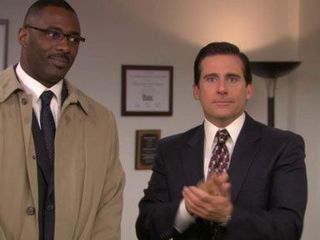
In last week's episode of "The Office," the character Michael Scott (the Manager) was under scrutiny by a new regional VP.  He called his top boss in New York and complained:

"It was my understanding I was not going to be managed."  He then tells his new boss, "I think I thrive under a lack of accountability."

The reason this is so funny is that it has become all too common.The Office
There are some very positive, yet unintended consequences to the current state of affairs with regard to the economy.  One of them is that hiring and review practices will change significantly.

Over the past few decades companies have gotten fairly sloppy about their hiring and retention practices, allowing the measurement of peoples' productivity to fall by the wayside.  When money flows freely and growth occurs effortlessly, a great deal of fat (in the form of non-productive workers) is tolerated because the urgency to measure everyone's direct contribution to the bottom line doesn't exist.

As companies tighten to squeeze out profits there will be much greater pressure to demand that each person demonstrate their value to the company.  This will be achieved through greater accountability.  Employees will be expected to meet measured expectations toward helping the company achieve its goals.

Below par performers will be churned out faster and replaced with people who are a more natural fit and want to do their best.  I know some of you might believe this to be a harsh statement.  On the contrary – I believe that it is the most compassionate thing that you can do for your employees.  Deep down inside, everyone strives to exercise the best of who they are.  We all aspire to contribute to something bigger than ourselves.  We all want to be part of trying to attain that incredible goal.

Allowing people to stagnate and become complacent about their performance is to enable them to give up on themselves.  If they aren't wanting their performance to be measured they are either in the wrong position, or they have already given up on themselves.  And if they've given up, don't fall into the trap of spending too much time trying to save them.

More tomorrow…


Posting Comments:  Have you ever posted a comment on a blog?  If not, you should try it.  It’s a fun way to get involved in the discussion and find out what others are thinking.  If you’re a shy person or want to maintain a higher level of privacy, just use your first name or a screen name.  Your email address will not be visible under any circumstances.  We’ll all benefit from hearing your thoughts.  To post a comment, click the comments tab below this posting.   

Showing Grit at Beer School

I want to chime in on Dave’s recent articles concerning the psychological trait of “grit." When we speak about this topic, there is always a well-spring of interest.  I think it provides people a sense of hope. 

Beer School Many of us know that we may not be the smartest or most talented people compared to many of our peers. There is not much we can do about our innate deficiencies and shortcomings.  However, hope surfaces from the belief that perhaps we can work harder than the next person, and possibly overcome seemingly insurmountable obstacles.  Faced with difficult circumstances, we can display a sense of resolve and persevere.  We can face the fear of failure and not give up.  Intelligence doesn’t help you at such inflection points…grit does!

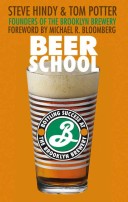
I read a book a few years back that has some great lessons regarding grit.  The book is called "Beer School:  Bottling Success at the Brooklyn Brewery," and it is the story of how Steve Hindy and Tom Potter founded, grew, and eventually sold the Brooklyn Brewery.

Personally, I really enjoy micro-brews, and I’ve been fascinated by the growth of this industry. That is probably what motivated me to read the book originally, but I was pleasantly surprised by what I learned about business and life in general.

The brewery was conceptualized in 1986 and by late 1987 both the founders were able to quit their day jobs and work full-time with the company.  Business progressed nicely for several years, but then faced a series of challenges that later caused Potter to describe 1991 as the longest year of his life.  Here is how Potter described this time period:

“Meanwhile, the Brooklyn Brewery was slowly going broke. We had committed to a new strategy and we hoped sales would grow, but we were still a long way from break even… [To cut costs] we gave up our small but comfortable offices on Fourth Avenue, moving quarters into the tiny cinder-block room inside our warehouse. It would be uncomfortable, but would reduce our rent obligation substantially.

I privately thought there was perhaps a fifty-fifty chance of survival… I had seen some bankrupt companies close up and I was under no illusion about what the endgame looked like. It would be me in an empty office at a phone for months, trying to collect as much of our accounts receivable as possible, in order to pay off debt, as a matter of honor.”

Tom Potter was a Yale-educated bank executive before he decided to start the Brooklyn Brewery. His partner, Steve Hindy, had already gone back to his job as a Reporter in order to save money. Tom could have easily done the same.  Certainly most people would have given up at this point. Can you imagine the amount of grit he had to muster to keep going at this point?

As you might have guessed, the perseverance of the founders paid off. By 2004 when the business was sold, the Brooklyn Brewery was among the top 40 breweries in the United States.

Many of our clients, professional contacts, and friends are going through difficult times due to the challenges in economy right now.  In a figurative sense, many people are sitting in their own “cinder-block rooms” with a fifty-fifty chance of making it.  What advice do you think Tom Potter would offer?

Editor's Note:  In a previous entry we directed you to a particular site to take a grit assessment – The site address was incorrect.  To take some interesting and informative grit assessments, please instead go to http://www.authentichappiness.sas.upenn.edu/Default.aspx


Posting Comments:  Have you ever posted a comment on a blog?  If not, you should try it.  It’s a fun way to get involved in the discussion and find out what others are thinking.  If you’re a shy person or want to maintain a higher level of privacy, just use your first name or a screen name.  Your email address will not be visible under any circumstances.  We’ll all benefit from hearing your thoughts.  To post a comment, click the comments tab below this posting.   
Brain Fun

Last week I presented a seminar to a group of executives in California.  The topic was brain science.  More specifically, I spoke about how the limbic portion of the brain takes over a person’s normal ability to reason and think creatively when a person is exposed to a high level of acute stress.  You may want to review our previous Workpuzzle article if you have more interest in this topic.BrainGraphic

In preparation for this talk, I reviewed some research on how the brain functions.  I guess my own mind became attuned to brain research because I later ran across this bit of trivia that caught my eye: 

Aoccdrnig to rscheearch at Cmabrigde Uinervtisy, it dseno't mtaetr in waht oerdr the ltteres in a wrod are, the olny iproamtnt tihng is taht the frsit and lsat ltteer be in the rghit pclae. The rset can be a taotl mses and you can sitll raed it whotuit a pboerlm. Tihs is bcuseae the huamn mnid deos not raed ervey lteter by istlef, but the wrod as a wlohe. Azanmig huh? yaeh and I awlyas tghuhot slpeling was ipmorantt!

There is probably no real research associated with this (it has apparently been floating around the internet since 2003), and I'm not sure what it really says about the brain…  Nonetheless, it is kind of fun!


Posting Comments:  Have you ever posted a comment on a blog?  If not, you should try it.  It’s a fun way to get involved in the discussion and find out what others are thinking.  If you’re a shy person or want to maintain a higher level of privacy, just use your first name or a screen name.  Your email address will not be visible under any circumstances.  We’ll all benefit from hearing your thoughts.  To post a comment, click the comments tab below this posting.  

Choosing Grit Over Talent

On Friday, I reviewed some literature and discussed the concept of "grit" (previous Workpuzzle blog).  Have you thought about your own grit level?  How about the grit level of your team?

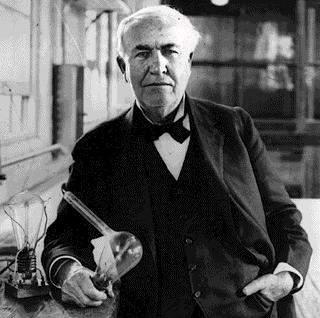
Thomas Edison Many successful people don't attribute their success to their IQ or level of talent, but rather to their tenacity.  Genius Thomas Edison was one of those people.  Edison once said:

"Many of life's failures are people who did not realize how close they were to success when they gave up" (Psychology Today).

Here is another prime example of grit:  Poet David Baker is Director of Creative Writing at Denison University, and author of seven books of poetry, including "Midwest Eclogue."  Mr. Baker laments: 

"Unfortunately, no one comes in my window and whispers poems to me… Poets [have to] work hard.  I may work on a single poem for weeks or months and write 60 or 70 drafts—only to decide that draft 22 was the good one" (Psychology Today).

Along these same lines, people often refer to Mozart's diaries, where he divulges that an entire symphony appeared, supposedly intact, in his head. However, Jonathan Plucker an educational psychologist at Indiana University points out:

"But no one ever quotes the next paragraph, where he talks about how he refined the work for months" (Psychology Today).

So, if you review the research I referenced in the last entry (previous Workpuzzle blog), you'll see that talent and genius are seriously overrated.  Grit appears to be the vital component.

So what can we learn from this?  The data shows that if we praise talent and accomplishments, we get stagnation, and even failure.  However, in studies where "effort" was rewarded, the result was growth and greater success.  Stick to rewarding effort in you and in others and you'll be on top of the next economic wave.

Success comes to those who work harder…


Posting Comments:  Have you ever posted a comment on a blog?  If not, you should try it.  It’s a fun way to get involved in the discussion and find out what others are thinking.  If you’re a shy person or want to maintain a higher level of privacy, just use your first name or a screen name.  Your email address will not be visible under any circumstances.  We’ll all benefit from hearing your thoughts.  To post a comment, click the comments tab below this posting.  

Do You Really Have What It Takes?

If you've been a regular reader, I bet you can take an educated guess regarding the answer to the following question:  Who out of us, stands the best chance of being on top of the next positive economic wave? 

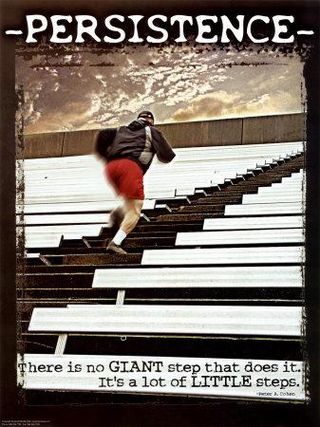
Do you think it's the smartest people?  If you do, then you haven't been reading our blog (or theGrit supporting research).  The following research offers more than a hint at the answer.

Angela Lee Duckworth, PhD, has conducted a series of studies on a concept called "grit."  Grit is another word for backbone, chutzpah, fortitude, guts, stick-to-it-iveness, etc.  It all started when Dr. Duckworth (while a student in Graduate School) observed that it wasn't necessarily the smartest people who succeeded and made a lasting impact on science. 

She had a hunch that it was a person's personal "grit" recipe that made the difference in their level of success.  Across six studies, Duckworth found that grit significantly contributed to successful outcomes:  Undergrads with the most grit earned higher grade point averages than their peers.  West Point Cadets with the highest levels of grit were more likely to return after the first summer.  Even "grittier" spelling bee competitors (a situation where IQ would seem the best predictor) out-spelled their less tenacious competitors.  Among older individuals, people with substantial grit had higher levels of education and made fewer career changes than less gritty peers of the same age.

In reviewing the literature, there appears to be little explanation as to how a person can acquire grit.  So, is this something we either have…or we don't?  Is it based on our genetic make-up?  Or, are there outside influences that haven't been explored as of yet (socio-economic status, traumatic circumstances early in life, family dynamics, etc…)

I may write more on this topic later but I'd like to hear from you first:
 
What has made you gritty (or not gritty)?

Please share your story by clicking on "Comments" below.  Describe a situation where you had tremendous grit.  What was behind that?  What emotions and circumstances fueled your efforts?

In the meantime, if you want to contribute to science, follow this link  http://www.ppresearch.sas.upenn.edu/ and you can take a ten minute grit assessment.

"When you get into a tight place and everything goes against you, till it seems as though you could not hang on a minute longer, never give up then, for that is just the place and time that the tide will turn."  (Harriet Beecher Stowe)


Posting Comments:  Have you ever posted a comment on a blog?  If not, you should try it.  It’s a fun way to get involved in the discussion and find out what others are thinking.  If you’re a shy person or want to maintain a higher level of privacy, just use your first name or a screen name.  Your email address will not be visible under any circumstances.  We’ll all benefit from hearing your thoughts.  To post a comment, click the comments tab below this posting.  

The Nerds May Triumph Again – Part 2

Yesterday we talked about how data geeks are getting into the Human Resources business.  One of the companies pioneering this effort is IBM.

I’ve often wondered… how does one manage a workforce of more than 400,000 full-time employees?  Well, one way is through basic mathematics.

In a recent Business Week article, researchers report:

“…as the role of computers in the workplace expands, employees leave digital trails detailing their behavior, their schedules, their interests, and expertise.  For executives to calculate the return on investment of each worker their human resources departments are starting to open their doors to the quants.”

You might be wondering how this plays out.  Is there some big control center where the real time value of an employee is calculated and registered in a database?  Do guys with thick glasses pour through the information and make graphs on how people contribute to an organization?  Almost…

“The chart looks like colorful pop-art doughnuts flying through space.  The message, though, is anything but playful…. Each circle represents an employee.  Those who generate or pass along valuable information within the company are portrayed as large and dark-colored circles….  Certain employees produce chunks of data—whether words or software code—that later pop up in other messages.  The people copied most often are thought leaders. They get big dark blue circles.  Other people spot the valuable content and pass it on. Those are networked curators. Their circles are bright red.”

Don’t get me wrong.  I do not think that these techniques are going to replace the need for real people to do meaningful work within organizations.  We still need leaders to inspire us, managers to execute business systems, and front-line employees to be engaged in doing the tasks that amount to the company’s contribution.  The article explains:  

"What about the worker who dispenses priceless wisdom the old-fashioned way, through spoken words at the coffee machine?  Much of that goes unrecorded by the analytic team.  So there are limits to number crunching.  Machines may advance in HR, but humans will retain a strong supporting role." 

I do, however, believe that a new level of mathematical rigor will be applied to the areas typically classified as “soft sciences” or the “art of management.”  As your competitors adopt these techniques, you too, will need to compete on this level.  You may find there are people in your organization with different capacities and skills who may excel at this work. Maybe the talented person being laid off in a technology group can fill a spot in HR!

On a personal level, you may want to start looking at your work from a data perspective.  Can the contribution you make to your organization be measured?  If you work independently, can your clients quantify your contribution?  Are the individuals you're managing and coaching making contributions that can be captured in a spreadsheet?  If you can't answer these questions, then chances are those paying the bills for your services can't either. 


Posting Comments:  Have you ever posted a comment on a blog?  If not, you should try it.  It’s a fun way to get involved in the discussion and find out what others are thinking.  If you’re a shy person or want to maintain a higher level of privacy, just use your first name or a screen name.  Your email address will not be visible under any circumstances.  We’ll all benefit from hearing your thoughts.  To post a comment, click the comments tab below this posting.