What Creates Talent? – Part 5


This entry represents the last edition of our Talent Code series (1, 2, 3, 4), which has spanned most of this last week.  Again, I am reporting primarily what Dan Coyle has found in his extensive research regarding talent development.


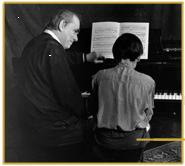
Music teacherThe focus of this final edition is on Coaches, or as Coyle puts it:  Master Coaching.  These are teachers, coaches, managers and mentors who approach the task of nurturing and helping others to grow “talent” (or in Coyle’s belief- build myelin: the essential ingredient to brain growth).  Coyle begins by pointing out that coaching/teaching/mentoring/managing is a skill, in itself, that takes a long time to build, and eventually master.


To support his claim, Coyle presents some fantastic examples of coaches, music teachers, and school teachers who have put in many thousands of hours of deep practice coaching and mentoring.  In other words… If you want to be a great coach, you need to hone your skills!  If you are an owner of a company, you must insist that your managers work on their coaching, just as they would any other skill they want to develop.


Coyle calls these great coaches “The Talent Whisperers.”  They are the teachers who view their jobs with the utmost seriousness.  These are the individuals who understand that it’s up to them to tap and sustain the second element of The Talent Code…Ignition.  As Coyle puts it, “They are creating and sustaining motivation.” 


Dr. Bloom, from the University of Chicago, researched 120 world class talents and summarizes:

“The effect of the first phase of learning seems to be to get the learner involved, captivated, hooked, and to get the learner to need and want more information.”

If you are responsible for managing/teaching/coaching, do you accomplish this?  I know that I have fallen short at times…or perhaps more importantly, lost sight of this underlying purpose of teaching.  If I’ve been a successful teacher by presenting you this fascinating insight from the The Talent Code, you might take it further, and read more from Dan Coyle’s book, which is full of similar insight.  And then apply, apply, apply…

What Creates Talent? – Part 4


Over the past week, I’ve shared some fairly counter-intuitive insight regarding talent development.  This information benefits anyone who is serious about recruiting, or wants to better coach their success-driven employees. (To catch up, read editions 1, 2, and 3)


Yesterday, I focused on what Dan Coyle has found regarding a concept that he calls ignition (momentAnna Kournikova of motivation launch).  All of us intuitively can grasp that to excel at anything, one must have the energy, passion and motivation to sustain a commitment to practice….not just any kind of practice, but deep practice.


To arrive at this level of commitment takes a moment where one experiences a spark, and says to him/herself, “I can do that, and want to do it!”  There are several ways this can happen.  A common way, is to witness achievement by someone who resembles you…someone you can relate to.


For example:

  • Since Se Ri Pak won the LPGA championship in 1998, South Korean women on tour steadily grew from one, to 33 in 2007.

  • Since Anna Kournikova reached Wimbleton finals, Russian women in the WTA top 100 has grown from three to 16.

Girls in these respective countries likely said…”She’s like me, and I can see myself doing that!”

  • As soon as Roger Banister managed to break what was considered to be an impossible barrier to the four minute mile, http://www.youtube.com/watch?v=uz3ZLpCmKCM, other runners began to break the record.  Knowing that it was possible was all it took to trigger the motivation.

  • For me it was watching The Bob Newhart Show in 1974 and thinking to myself that Bob had the sweetest job in the world:  Getting paid to hang out with quirky people!  I know, not too deep a reason, but it did ignite the original spark. 

Whatever it is that lights the spark must happen before the commitment to practice.


Here’s a prime example of the link between ignition and commitment:  Gary McPherson set out to understand what differentiated those kids who continue to practice musical instruments and those who give up?  Predicting the continuation and talent development turns out to rest on a simple answer to a simple question:


Before children began music lessons they were asked to identify how long they believed that they’d play their instrument.  The categories were:  (1) Short-term commitment, (2) Medium-term commitment, and (3) Long-term commitment.


The results were staggering.  With the same amount of practice, the long-term commitment group out-performed the short-term group by 400%.  So what matters most, it appears, is one’s ignition level – This is what ultimately determines commitment level.


So, what does this mean for you?


How many times have you asked a new recruit about their ignition story…about what initially sparked their interest in their given field?…Or, how long they planned on continuing in their line of work?  And don’t settle for vague answers – Commit to getting solid answers.  Those answers may be the most important information you’ll ever get regarding the future your employees.


Igniting a hot bed of talent can be done.  We’ve just begun to scratch the surface regarding how it can be done.  If you’re responsible for talent development, you owe it to yourself to read Dan Coyle’s book.


Tomorrow, I’ll describe the third principle of talent growth:  Master Coaching!

What Creates Talent? – Part 3


In the last of my discussions regarding Dan Coyle’s work on Talent, I promised to summarize some of his findings around the concept of motivation (the second of three vital components of talent creation).  Coyle found that people tend to have what he calls a moment of “ignition” prior to developing great talent. Specifically, he contends that people need to have a moment, or period of time, that inspires them to be great at something.  Without these moments or circumstances, we can’t sustain the lonely discipline of deep practice.


Talent


I’d like you to reflect on your own talent before I provide any more specifics regarding motivation/ignition:  Where does your talent lie?  How did you develop this talent?  What drove you to practice or study to develop your skills?  Where and when did the ignition take place?  What was your environment like while you were developing your talent?


How have the most talented members of your team developed their talent?  Ask them how and where they were “ignited?”  Has it ever occured to you to ask this of your top talent, or of prospects or individuals who you’re trying to recruit?  The more you know about people, the the more relationship credibility you will build, and the better you can manage.


Tomorrow, I’ll elaborate some more on the details of Ignition

Twitter by the Numbers: What is Really Going On?


About three months ago, I wrote an article about Twitter, and the potential it has to change the way we collect and catalog information as a society.  At the time, Twitter was growing quite rapidly, and it was difficult to tell where the trajectory was leading.


I just ran across some interesting research that may give us some insight into this question.  The research was conducted by HubSpot, an internet marketing firm based in Boston.  Hubspot found that of those who sign up for Twitter accounts…

  • 54.88% have never tweeted  (i.e. have never posted anything)
  • 55.50% are not following anyone (i.e. are not reading anyone else’s posts)
  • 52.71% have no followers (i.e. no one is reading their posts)


Oprah on TwitterWhat does this mean?  Most people who sign-up for Twitter, never use it!  It is difficult for a service, such as Twitter, to have a substantial impact if the majority of the subscribers are not using it.  This is similar to a bunch of people buying their parents a fax machine in the ’80s—great idea, but nobody could get their parents to actually use it.


The hope of the business world, is that Twitter will become a vast database of information that will allow marketers—recruiters included—to tap into the demographics and preferences of millions of individuals.  The HubSpot research uncovered some disappointments there as well:


  • 75.86% of users have not entered a bio in their profile
  • 68.68% have not specified a location

It’s tough to draw conclusions from a data source that is so limited.  The only available information are the millions of 140-character “tweets.”  Maybe the FBI could make some sense of this type of disconnected information, but the rest of us remain at a loss.


There is much more data becoming available that can give us clues about the reality of Twitter.  For example, a recent study by PMN documented that only 22% of Generation Y consumers (18 – 24 years old) are using Twitter (99% have active accounts on a social networking site, such as Facebook). 


You’d think more of this demographic would be driving the buzz about this network, but that is not the case.  We do know that 56% of executives under the age of 40, regularly tweet or generate microfeeds (source: ClickZ study, June 09).  Do you think anyone is reading them?  Probably not.


I think there are a couple of points a recruiter or hiring manager can take from this discussion:

  1. If you’re feeling an overwhelming amount of guilt because you’re just not connected with the concept of Twitter, this should relieve your guilt.  You’re not the only one that doesn’t “get” Twitter—many of your candidates are in the same boat.
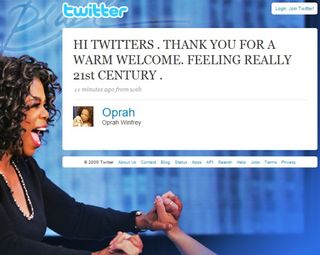
  2. Don’t expect a tool, such as Twitter, to release you from the hard work of recruiting.  It would be great to publish something and then have thousands of people lap it up and find you endearing (isn’t that why Oprah tweets?).  But, it usually doesn’t that work way.  Make the calls, send the emails, have the one-on-one conversations, etc.  Twitter may help you in some small way, but the traditional tasks of recruiting will continue to produce the most consistent results.


Getting Inside Your Candidate’s Head


Shoes As a recruiter or hiring manager, it is important to be able to put yourself in the shoes of your candidates.  From a marketing perspective, your messaging needs to ring true with the individuals viewing your ads.  The objective is to have an emotional impact, followed by prompt action.  For high-quality candidates… you know, the ones you really want to have join your team… the need to make an emotional impact carries over into the interview.
 
This begs the question:  What’s going on inside the candidate’s head?  What are this individual’s priorities?  What are the significant issues that are going to cause the person take action?  All are great questions.


I came across some research this week that gives us some insight on this topic.  The research was conducted by The Society of Human Resource Management (SHRM).  The study involved presentation of a list of common job traits, and a request for employees to rank their importance.  They used a four-point scale to indicate what they felt was “very unimportant” (a “one” on the scale), on up to “very important” (a “four”).  The percentages below indicate how many people ranked the given item a four, meaning “very important.”


JOB TRAIT – PERCENTAGE WHO RANK ITEM AS “VERY IMPORTANT”

  • Job security – 63%
  • Benefits – 60%
  • Compensation/Pay – 57%
  • Opportunity to use skills/abilities – 55%
  • Feeling safe in the work environment – 54%
  • Relationship with the immediate supervisor – 52%
  • Management recognition of employee job performance – 52%
  • Communication between employees and senior management – 51%
  • The work itself – 50%
  • Autonomy and independence – 47%
  • Flexibility to balance life and work issues – 46%
  • Meaningfulness of job – 45%
  • Overall corporate culture – 45%
  • Relationships with co-workers – 42%
  • Contribution of work to organization’s business goals – 39%
  • Job-specific training – 35%
  • Variety of work – 34%
  • Career advancement opportunities – 32%
  • Organization’s commitment to corporate social responsibility – 31%
  • Organization’s commitment to professional development – 30%
  • Paid training and tuition reimbursement programs – 29%
  • Career development opportunities – 22%
  • Organization’s commitment to a “green” workplace – 17%

As a hiring manager, I suggest you digest this list from a couple of perspectives.  (1) How do the employment opportunities you’re offering line up with what candidates want in a job?  (2) In the marketing and interviewing process, are you emphasizing issues that have a minimal chance of impacting your candidates?

What Creates Talent? – Part 2


In yesterday’s blog I began to share some facts that challenge the way we think about talent development.  I think you’ll find over the next few weeks, the material I share with you on this topic will change the way you train, recruit and coach. 


In my intro, I included questions similar to the following:

  • Why has one tennis camp in Russia developed more top ten athletes than any other?Russian Tennis

  • Why has one music school in New York turned out the likes of Itzhak Perlman and Yo Yo Mah?

or, as metioned previously…

  • Why have 12 different boys from the extremely small country of Curacao, made it to the semifinals of the Little League World series, six times over the past eight years, even taking the title once?

In his book The Talent Code, Daniel Coyle uncovers certain consistent patterns that exist in every “talent hot bed” in the world.  Specifically, these patterns include similar methods of practice, motivation, and coaching.


So, let’s examine these three components further:  Practice, Motivation (he calls it Ignition) and Coaching (he calls it Master Coaching):


It turns out that Practice, in each of the talent hot beds, is achieved in a very similar way.  It is performed so that mistakes can be tracked and modified, without missing the opportunity for correction.  For example, in one of the top music schools, students are asked to play so slowly that nobody can possibly recognize the song being played – The student is then able to notice imperfections and train the brain to grow in this area.


Similarly, tennis players are trained to work through routine movements slowly, without a ball, to train the brain to grasp the fundamentals before actually hitting a ball. They do this throughout many years of training.


What is happening in the brain while one trains like this? (from a recent blog that also references The Talent Code, but worth including again)

Your brain is made up of millions of neurons and synapses, all with the ability to build super highways of super speed.  All that is needed to build these connections is a substance called Myelin.  Myelin, it’s recently been found, has the ability to grease the skids between neurons so that large pathways are formed to create mega bandwidth learning and growth, if given the opportunity.  And guess what gives your brain the greatest opportunity for Myelin production?… Failure!  Not just failure, but lots of failure…the more the better!  And not just large doses of failure, but failure and correction, failure and correction, failure and correction…


Here’s an example:


In 1997, Soccer Coach, Simon Clifford, was so curious about what caused Brazilian Soccer to be so successful, that he temporarily moved to Brazil and lived in a dimly lit dorm-like setting to find out first-hand.  What he found has changed the way many elite youth soccer teams practice, and has made Simon Clifford a very wealthy man, given that he has founded worldwide “Brazilian Soccer Schools” all over the globe.


What he found was that everyone, except the professionals, were playing a much smaller game of soccer on a small, hard court, with a heavier ball.  Given the small space, the game moved quickly and frantically, with split-seconds to decide where to pass, to whom, and how.  In other words, unlike American Soccer, Brazilian Soccer offers many more chances to fail and succeed in each minute of play, for each player – Every player touches the ball six times more per minute, to be exact.


When the brain experiences this incredible frequency of failure and correction, it grows Myelin like mad!  Super highways are formed that can ultimately lead to amazing talent.

So what does this teach us?


When we are training, it’s not the “talented” people we should focus on, it’s the people who share the capacities of the top performers, and are willing to practice until they reach mastery of a given skill.  People who are willing to practice scripts, over and over and over… Sales people who are willing to make multiple calls, fail/correct, then fail/correct, again and again…These will be the folks who develop talent!


I don’t know each of your businesses well enough to definitively be able to articulate what should/shouldn’t be part of your training regimen, but I do think that if you can mirror the practices of these talent hot beds, tailored to your industry of course, you have a much better chance of turning out some true talent. 


I would love to hear your ideas regarding how your company’s training might be able to resemble these talent hot beds… 


Next:  Ignition (Motivation)