
More About Grit: Predicting and Coaching for Success


In past articles, we’ve highlighted the works of both Dr. Angela Duckworth, a psychologist at the University of Pennsylvania; and Dr. Carol Dweck, a psychologist from Stanford University.  These women are two of the most influencial leaders on the topic of grit.  Both professionals have a passion for researching what, in fact, we should be measuring with regard to propensity for success.Grit

Johan Lehrer puts it this way in his recent article in the Boston Globe:

“One of the main obstacles for scientists trying to document the influence of personality traits on achievement was that the standard definition of traits – attributes such as conscientiousness and extroversion – was rather vague.


Duckworth began wondering if more narrowly defined traits might prove to be more predictive.  She began by focusing on aspects of conscientiousness that have to do with ‘long-term stamina,’ such as maintaining a consistent set of interests, and downplayed aspects of the trait related to short-term self-control, such as staying on a diet.  In other words, a gritty person might occasionally eat too much chocolate cake, but they won’t change careers every year.  ‘Grit is very much about the big picture,’ Duckworth says.  ‘It’s about picking a specific goal off in the distant future and not swerving from it.’”

In essence, Duckworth is suggesting that, rather than IQ level, what we should be measuring is a person’s ability to narrow and maintain focus on a particular goal.  Research confirms that this is a better predictor of a person’s potential than their intelligence and well-rounded background. 


If you’re a hiring manager, think about how you interview candidates…  Would this be a trait that you could measure during an interview by changing the types of questions you ask?  If so, you’d probably be more successful at predicting your prospective employee’s potential in your organization.


If you’re in a coaching role, you can also take advantage of the research in this area:

“While Duckworth and others are quick to point out that there is no secret recipe for increasing grit – ‘We’ve only started to study this, so it’s too soon to begin planning interventions,’ she cautions – there’s a growing consensus on what successful interventions might look like.


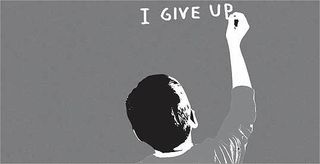
One of the most important elements is teaching kids that talent takes time to develop, and requires continuous effort.  Dweck refers to this as a ‘growth mindset.’  She compares this view with the ‘fixed mindset,’ the belief that achievement results from abilities we are born with.  ‘A child with the fixed mindset is much more likely to give up when they encounter a challenging obstacle, like algebra, since they assume that they’re just not up to the task,’ says Dweck.


Interestingly, it also appears that praising children for their intelligence can make them less likely to persist in the face of challenges, a crucial element of grit.  For much of the last decade, Dweck and her colleagues have tracked hundreds of fifth-graders in 12 different New York City schools.  The children were randomly assigned to two groups, both of which took an age-appropriate version of the IQ test.  After taking the test, one group was praised for their intelligence – ‘You must be smart at this,’ the researcher said – while the other group was praised for their effort and told they ‘must have worked really hard.’


Dweck then gave the same fifth-graders another test.  This test was designed to be extremely difficult – it was an intelligence test for eighth-graders – but Dweck wanted to see how they would respond to the challenge.  The students who were initially praised for their effort worked hard at figuring out the puzzles.  Kids praised for their smarts, on the other hand, quickly became discouraged.


The final round of intelligence tests was the same difficulty level as the initial test.  The students who had been praised for their effort raised their score, on average, by 30 percent.  This result was even more impressive when compared to the students who had been praised for their intelligence:  their scores on the final test dropped by nearly 20 percent.  A big part of success, Dweck says, stems from our beliefs about what leads to success.”

Could this change your perspective on how you coach those on your team?  It is so natural to praise those we coach for their natural abilities.  While this feels natural and right, the research shows it is counterproductive.


It may be better to just let the natural talents speak for themselves, and seek to praise someone for living out their values and displaying positive virtues.  Grit is one of these virtues, but there may be more.  It will be interesting to see what the research unveils in the future…

More on Grit: The Problem with Measuring Intelligence


Have you ever wondered why intelligence and academic achievement are so revered in our society?  My oldest son is 16 years old and entering his junior year in high school.  He is becoming increasingly aware that college is just around the corner, and is doing his best to prepare himself for it.  We’ve noticed that the college admissions process is mainly about grades and SAT scores, and little about his ability to work hard and follow-through on accomplishing his goals.


IQ Test Interestingly, research shows that setting a specific, long-term goal, and doing whatever it takes until that goal has been reached (“grit”),will be more predictive of his success than his grades or academic achievement.  Most of us assume this must be a brand new revelation, but look what Jonah Lehrer points out in his recent article in the Boston Globe:

“In 1869, Francis Galton published ‘Hereditary Genius,’ his landmark investigation into the factors underlying achievement.  Galton’s method was straightforward:  he gathered as much information as possible on dozens of men with ‘very high reputations,’ including poets, politicians, and scientists.  That’s when Galton noticed something rather surprising:  success wasn’t simply a matter of intelligence or talent.  Instead, Galton concluded that eminent achievement was only possible when ‘ability combined with zeal and the capacity for hard labour.’


Lewis Terman, the inventor of the Stanford-Binet IQ test, came to a similar conclusion.  He spent decades following a large sample of ‘gifted’ students, searching for evidence that his measurement of intelligence was linked to real world success.  While the most accomplished men did have slightly higher scores, Terman also found that other traits, such as ‘perseverance,’ were much more pertinent.


Terman concluded that one of the most fundamental tasks of modern psychology was to figure out why intelligence is not a more important part of achievement:  ‘Why this is so, and what circumstances affect the fruition of human talent, are questions of such transcendent importance that they should be investigated by every method that promises the slightest reduction of our present ignorance.’


Unfortunately, in the decades following Terman’s declaration, little progress was made on the subject.  Because intelligence was so easy to measure – the IQ test could be given to schoolchildren, and often took less than an hour – it continued to dominate research on individual achievement.


The end result, says James J. Heckman, a Nobel Prize-winning economist at the University of Chicago, is that ‘there was a generation of social scientists who focused almost exclusively on trying to raise IQ and academic test scores.  The assumption was that intelligence is what mattered and what could be measured, and so everything else, all these non-cognitive traits like grit and self-control, shouldn’t be bothered with.’ “

I find all of this a bit humorous.  It seems that much of our systems of higher learning are based on the premise that intelligence and academic achievement predict a person’s propensity for success.  But, ironically, they don’t really predict success very well at all…they’re just easy to measure.  Yikes!  This makes me even more concerned about spending hundreds of thousands of dollars on my kids’ educations!


Tomorrow, we’ll discuss the transition that is evolving regarding the traits that are believed to actually precede success.  A group of very insightful researchers are performing the hard work of measuring and tracking what truly leads down the path to success… 

More on Grit: Sir Isaac Newton’s 22-year Epiphany


About six months ago, Dave wrote a couple of articles on the topic of “grit.”  We received a lot of feedback on this topic from our clients who are regular readers of WorkPuzzle.  It seems to be a topic that intrigues many of us.


Sir Isaac Newton Earlier this month, the topic also caught the attention of the Boston Globe.  Jonah Lehrer wrote a lengthy Sunday morning feature on the topic.  Over the next couple of days, I’m going to highlight a few ideas from Lehrer’s article to help us gain a better understanding of this important topic.

“It’s the single most famous story of scientific discovery:  In 1666, Isaac Newton was walking in his garden outside Cambridge, England – he was avoiding the city because of the plague – when he saw an apple fall from a tree.  The fruit fell straight to the earth, as if tugged by an invisible force.  (Subsequent versions of the story had the apple hitting Newton on the head.)  This mundane observation led Newton to devise the concept of universal gravitation, which explained everything from the falling apple to the orbit of the moon.


There is something appealing about such narratives.  They reduce the scientific process to a sudden epiphany:  There is no sweat or toil, just a new idea, produced by a genius.  Everybody knows that things fall – it took Newton to explain why.


Unfortunately, the story of the apple is almost certainly false; Voltaire probably made it up.  Even if Newton started thinking about gravity in 1666, it took him years of painstaking work before he understood it.  He filled entire vellum notebooks with his scribbles and spent weeks recording the exact movements of a pendulum.  (It made, on average, 1,512 ticks per hour.)  The discovery of gravity, in other words, wasn’t a flash of insight – it required decades of effort, which is one of the reasons Newton didn’t publish his theory until 1687, in the ‘Principia.’


Although biographers have long celebrated Newton’s intellect – he also pioneered calculus – it’s clear that his achievements aren’t solely a byproduct of his piercing intelligence.  Newton also had an astonishing ability to persist in the face of obstacles, to stick with the same stubborn mystery – why did the apple fall, but the moon remain in the sky? – until he found the answer.”

Notice the time it took Newton to figure out the scientific Law of Gravity — 22 years!  Was Newton willing to work hard?  Of course he was.  But, grit isn’t simply about a willingness to work hard.  It’s about setting a specific long-term goal and doing whatever it takes until the goal has been reached.  It’s always much easier to give up, but people with grit keep going, despite the hardships and obstacles they encounter.


If you’re a hiring manager, this is an important topic to consider when interviewing.  Ask questions that help you learn if a person has displayed a Newtonian stick-to-itiveness in their past jobs or life experiences.  These are the people who are most likely to display the same traits on your team.


If you have the responsibility for coaching those in your group, consider using Newton’s story in an upcoming coaching session.  We all need inspiration to set goals and stick to them.  When we see that the most successful people in history used this formula, it renews our resolve to follow the same path. 

Why Can’t I Shake Anyone Loose Right Now? – Part 2


Yesterday, we discussed the psychological response candidates experience when the economy is unstable.  As previously mentioned, if prospective candidates are in established job situations during a recession, there is a tendency for them to pull back and act conservatively.  This explains why our real estate client is having a difficult time “shaking people loose” from his competitors while the market is in such disarray. Two sides to the market recovery coin...


This will remain the reality of recruiting until the economy starts to recover.  As the recovery starts, there will be signs of life that appear in the labor market.  Lou Adler offers further insight into this topic in his recent article:

“As hiring ‘green shoots’ appear, those who are the most fed up with their current jobs (the least satisfied) will begin to pursue other opportunities.  As these people leave, companies will fill these empty seats, most likely with others, currently fully employed.  Soon these trickles of churn will turn into significant streams of turnover that will be measured in the national labor statistics.  This spike in turnover is an early indicator of an economic recovery.”

There are two sides to the market recovery coin:  The first side is the advantage that can be gained from the renewed energy people will feel as the recession ends. This sense of hope will result in candidates, once again, willing to consider new opportunities.  For some candidates, there is also a sense of throwing off the weight of an organization that has not met their needs beyond stability.


The time to prepare for the upcoming churn is now.  Do you have systems in place to engage people who are willing to talk about new opportunities?  As a hiring manager, are you holding yourself accountable to completing the tasks that are known to produce results?  Are you able to articulate the benefits of being part of your team during a period of recovery?


The flip side of the recovery coin is retention— the employment churn will run both ways.  If there is penned up angst in other organizations that will soon be released, it’s foolish to believe that there is not some penned up dissatisfaction in your own organization.
  
Now is the time to address these issues as well.  Have you spent time talking with your existing team about what frustrates them in their current situation?  While you may not be able to currently dedicate a lot of resources to solve some of the problems, do your employees know that you have identified the most important issues and have a plan for resolving these issues once resources start to flow again?
 
While we all want to take advantage of Maslow’s Principle of Self-Actualization, it can also be the force that causes your existing organization to suffer.  Don’t miss the opportunity to prepare for the changes that will be here sooner than you expect.

Why Can’t I Shake Anyone Loose Right Now?


A couple of weeks ago, I had dinner with a real estate executive on the East Coast.  The topic of conversation turned to the difficulty his organization is having in recruiting experienced real estate agents from his competitors.


Fruit tree In the past, this individual had great success recruiting his competitors’ agents.  In addition, he was able to teach his first-line managers to duplicate his accomplishments.  That is, until recently…


As the real estate market initially soured and then remained stagnant in his area, he noticed the recruiting results of his managers start to diminish.  He coached and prodded his managers with little improvement.


Eventually, out of frustration, he picked up the phone and started making recruiting calls on his own, in an effort to determine the source of the problem.  His frustration grew stronger:

“I just can’t seem to shake anyone loose right now!  The agents in our market are just not willing to make a move no matter what you offer them.”

We discussed some strategies for growing his agent base outside of traditional techniques.  All the while, his mounting frustration got me thinking.  Why would agents be less willing to move during difficult times?  Wouldn’t people seek out better opportunities when things are challenging?  Not necessarily.


Lou Adler offers some insight into this topic in a recent article he wrote:

“As part of his ‘Hierarchy of Needs,’ Maslow suggested that while people consistently strive for personal improvement, they become conservative in difficult economic times.  During these periods, trade-offs are made where people protect their assets, including their jobs, avoid any unnecessary risk, and reduce their expenses.  This is why good people, who are fully employed, are reluctant to move during economic slowdowns.”

We all know what goes on in a person’s mind, has a profound effect upon his/her actions.  This sense of “hunkering down” is not easy to overcome.  In fact, it may be a waste of time to try to push against this kind of psychological perception.  There is no magic bullet.


Any results that are realized in this kind of environment will be gained through perseverance, grit, and acceptance that the conversion metrics are going to be much lower than they would be during better times.  In other words, to produce the same results you experienced in the past, it is going to take three times the effort!


Here’s the good news:  Things won’t stay this way forever.  Tomorrow, we’ll discuss what to expect when the economy begins to improve and people beginning exploring opportunities once again, and the penned up demand from the last couple of years starts to be released.  These coming changes could have a profound effect on your recruiting and the make-up of your current organization.

Recruiting Is Like Dating


A year and a half ago, I wrote a newsletter article on this subject and received some very positive responses from managers who had tried the approach.  One manager claimed that it was what finally Interview hooked an agent who she had been trying to recruit for years.  Instead of “trying to recruit” like “trying to pick someone up,” she simply took the agent out for a glass of wine and listened— That was it!  The agent called the next day to join her company.


So, I think it would be beneficial to revisit the content of that original letter.  By the way, no matter what business you are in, if you influence people in any way, you can benefit from the following information:

The basics:


Building a pipeline of agent candidates, or recruits of any type, is similar to building a sphere of influence.  You cannot rely on luck or one-time conversations.  You must build rapport with consistent follow-up and lots of attention.


What people need:


Just like people need air to breathe and food to eat, they need acknowledgement and attunement to become attached to a company.  Attunement means “to adjust or accustom your response to become receptive or responsive to someone else.”


For those of you who have ever dated… How many of you like to hear your date drone on and on about themselves without wanting to know anything about you?  We all know that this is a very bad sign.  It really means that the person desires a relationship for the purpose of meeting their own needs, and cares very little about meeting yours


Being attuned means that you are interested and curious about the given person.  Being attuned helps build attachment, and attachment leads to hiring and thus, commitment to your organization.


What happens when you treat a person like an object? 


Treating people like an object is never a good idea. People have a sixth sense about this.  If you are interviewing and coaching a person who is fairly desperate for a job, he/she might put up with it for awhile.  But, sooner or later, frustration will set in and he/she will want to leave.  You see, they know that you have no interest in them beyond what they are generating for you and your organization.  BUSTED! – They’ll take the first opportunity to leave.


Solution:


First, examine yourself:  Do you treat those who work for you as objects?  Or, do they know that you are genuinely interested in their growth for their sake, as well as the company’s?  If you’re unsure, ask a few people you trust who will give you an honest answer. If you do have this tendency, there is a very simple rule of thumb to apply in every interaction:  Following the tried and true “Golden Rule,” ask yourself, “How would I like to be treated if I were in their shoes?” 


Additionally, remember that impatience is the fruit of pride.  Most of us would like others to be patient; We’d like them to be interested in our strengths and how we use them daily; we’d like them to be curious about us as people who have lives outside of the office.

If you want to build an environment of attachment and performance, you need to seriously consider how to shape your own strengths around the above solution.  The challenge is keeping it up after the dating, and during the marriage.